5 - Classic Drapery Styles
A clear comparison of five enduring custom drapery headings, including how each style hangs, the rooms it suits, and the construction details that influence the finished result.
The drapery heading—the way fabric is shaped at the top—determines how the panels stack, move, and frame a window. Fabric, fullness, lining, hardware, ceiling height, and architecture matter just as much as the pleat style itself.
1. Pinch Pleat Drapery
Pinch pleats use groups of folds secured near the lower portion of the heading. The structure creates controlled fullness and an elegant fan above each pleat.
Best for: Transitional and traditional living rooms, dining rooms, bedrooms, and formal spaces.
Consider: The number of fingers, spacing between pleats, fabric weight, and whether the panel will be stationary or operable.
2. French Pleat Drapery
French pleats are a refined variation of pinch pleats, typically formed with three folds. They create a full, tailored profile that works well with decorative rods, rings, or traversing hardware.
Best for: Rooms that need classic structure without excessive ornament.
Consider: Heavier fabrics may require reinforced headings and appropriately rated hardware.
3. Parisian Pleat Drapery
Parisian pleats are secured closer to the top of the heading, allowing the folds to open below. The result feels crisp, architectural, and slightly more contemporary than a traditional pinch pleat.
Best for: Transitional interiors, tailored bedrooms, modern dining rooms, and high-ceiling spaces.
Consider: This heading benefits from precise fabrication because uneven tack points are visually noticeable.
4. Inverted Box Pleat Drapery
Inverted pleats fold fabric inward, creating a flat face with hidden fullness behind it. The style is clean and geometric, making it useful when the room calls for strong vertical lines.
Best for: Contemporary interiors, home offices, commercial spaces, and rooms with graphic architecture.
Consider: Inverted pleats are often better for stationary panels than frequently opened treatments unless the hardware and fabrication are designed for movement.
5. Tailored or Modern Pleat Drapery
Modern pleat styles simplify traditional construction through restrained folds, bar tacks, or narrow pleats. They provide fullness while maintaining a clean profile.
Best for: New construction, contemporary homes, lofts, and rooms where the fabric should remain the focus.
Consider: A simple heading does not mean simple fabrication. Fullness, pattern matching, hem depth, lining, and return measurements still require precision.
How Much Fullness Does Custom Drapery Need?
Many custom draperies use approximately two times fullness, although the right ratio depends on the fabric, heading, pattern, desired volume, and whether the panels are decorative or functional. Lightweight sheers may need more fullness; bulky textiles may need less.
Mounting Height and Width Matter
Mounting drapery higher and wider than the window can visually increase ceiling height and preserve daylight. The exact placement should account for crown molding, adjacent walls, furniture, radiator or vent locations, stack-back space, and the hardware projection.
Frequently Asked Questions
Which drapery style looks most formal?
French and pinch pleats typically read as the most formal, especially in substantial fabrics with interlining and decorative hardware.
Which pleat works best in a modern home?
Parisian, inverted box, and tailored modern pleats offer cleaner lines that complement contemporary architecture.
Should drapery touch the floor?
Most tailored installations either clear the floor slightly, break gently, or intentionally puddle. The choice depends on operation, cleaning, pets, children, and the desired degree of formality.
Custom Window Treatments in Charlotte
Stacy Nicole Interiors provides measurement, specification, fabric and hardware selection, fabrication coordination, and installation through our Custom Window Treatments, Drapery + Blinds service. We serve Charlotte, SouthPark, Myers Park, Ballantyne, Lake Norman, and surrounding communities.
Request a consultation to select the right treatment for your windows, light-control needs, and interior architecture.

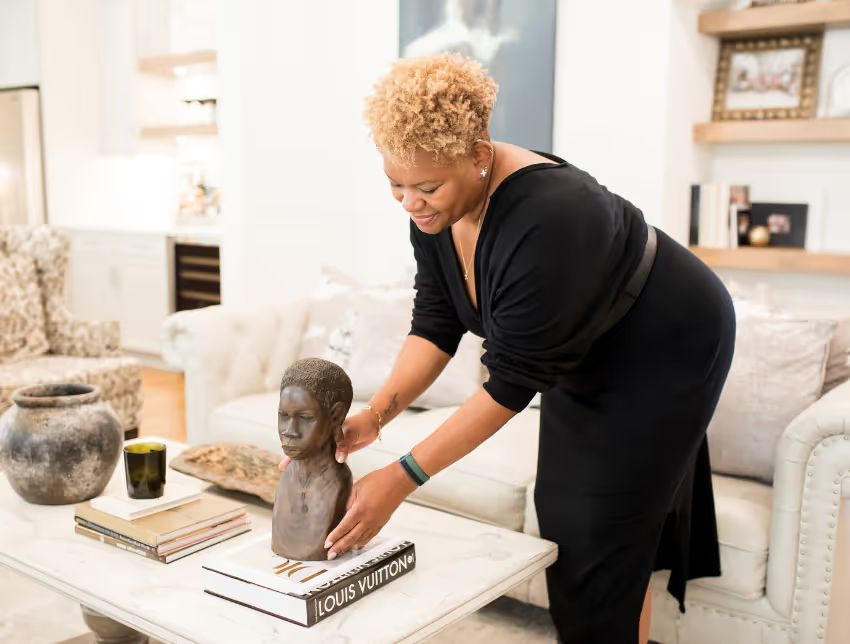
Brand photography by Stanley Desbas Photography. Thank you for helping tell the story behind Stacy Nicole Interiors.
Nicole S. Ingram, ASID Allied is the creative force behind Stacy Nicole Interiors and the author of TriniGal Chronicles. A designer, lifestyle curator, and beauty enthusiast, Nicole shares soulful inspiration through her signature blend of elevated interiors, personal style, and island-rooted charm.
Welcome to TriniGal Chronicles — where I serve up daily doses of interior design, lifestyle, and beauty to help you live a soulful, stylish life. Sprinkled in, you’ll find cocktail recipes, my favorite meals to cook, and maybe a design find or two. Stay a while, and don’t forget to say hello in the comments!
Meet Nicole