What Philanthropy Taught Me About Designing Spaces That Serve People
Philanthropy changes the way you see a room. It teaches you to notice who is being welcomed, who is being overlooked, and how thoughtful design can help people feel supported. Here is how those lessons shape the work of Stacy Nicole Interiors in Charlotte and beyond.
Interior design is often described as the art of making a space beautiful. While beauty matters, the most meaningful spaces do something more. They support the people who live, work, gather, heal, learn, and grow within them.
My work in philanthropy and community service has deeply influenced how I approach design. Serving on committees, supporting nonprofit organizations, working alongside volunteers, and participating in community-centered initiatives have taught me to look beyond the surface of a space.
A well-designed interior should not simply photograph beautifully. It should make people feel considered.
Design Begins With Listening
Philanthropy teaches you that meaningful service begins by listening. Before offering a solution, you have to understand the people, circumstances, and needs involved.
That same principle applies to interior design.
Before selecting finishes or discussing furniture, I want to understand how a client actually lives. What feels difficult in the home? Where does the family gather? What routines should be easier? What does the space need to support emotionally, physically, and practically?
The answers often reveal that the design problem is not simply about color or furniture. It may involve storage, accessibility, lighting, privacy, acoustics, or the way people move through the home.
Listening allows the design to become personal rather than generic.
Beauty Should Have a Purpose
A beautiful room should also work beautifully.
Philanthropic work has reinforced my belief that every design decision should serve a purpose. A coffee table should support conversation. Lighting should create comfort and visibility. Upholstery should withstand real life. A guest room should offer more than a place to sleep; it should make visitors feel welcomed and cared for.
This does not mean a functional space has to feel utilitarian. Thoughtful design allows practicality and beauty to exist together.
In a Charlotte home, that may mean designing a refined living room that can accommodate family gatherings, creating a durable mudroom for an active household, or developing a home office that supports focus without feeling disconnected from the rest of the home.
Inclusive Design Is Thoughtful Design
Serving people also means recognizing that not everyone experiences a space in the same way.
Good design considers different ages, abilities, comfort levels, and routines. It asks questions such as:
- Is the lighting comfortable for everyone?
- Is there enough space to move through the room easily?
- Are seating heights and surfaces practical?
- Can guests find their way through the home?
- Does the room support both conversation and retreat?
- Are materials durable enough for the people using them?
Inclusive design is not about making a space feel clinical or overly specialized. It is about creating an environment that anticipates real human needs.
The most successful interiors often feel effortless because the thoughtful decisions are built into the design.
Community Shapes the Way We Gather
Philanthropy has also shown me the importance of gathering spaces.
The way a room is arranged can encourage connection or create distance. Seating can invite conversation, while poor circulation can make people feel crowded or disconnected. A dining room can become the heart of a home when it supports lingering, storytelling, and shared meals.
Design has the power to influence how people interact.
That is especially important in hospitality, civic, nonprofit, and community spaces. A reception area should feel welcoming. A meeting room should encourage participation. A cultural or historic space should respect the people and stories connected to it.
The design should communicate: You belong here.
Designing With Responsibility
Interior design involves resources, budgets, materials, labor, and long-term decisions. Philanthropy has made me more aware of the responsibility that comes with those choices.
A thoughtful designer considers how a space will perform over time. Rather than selecting items simply because they are trending, I look for materials, furnishings, and finishes that support the client’s long-term goals.
This includes thinking about:
- Durability
- Maintenance
- Longevity
- Accessibility
- Local craftsmanship
- Responsible purchasing
- Flexible use
- The emotional impact of the finished space
The goal is not to fill a room. The goal is to create an environment that continues to serve people well.
Spaces Can Reflect Values
Every interior communicates something.
It may express hospitality, creativity, calm, heritage, ambition, or belonging. The most personal homes are not designed around trends alone. They reflect the values of the people who live there.
That may mean incorporating family heirlooms, supporting local artists, preserving architectural details, or choosing materials that feel connected to a client’s history.
A soulful interior does not have to be perfect. It has to feel meaningful.
Designing Spaces That Serve People
Philanthropy has taught me that service is not about being the center of attention. It is about paying attention to what people need and creating conditions that help them thrive.
That lesson continues to shape my work as an interior designer.
The best spaces are not only visually compelling. They are welcoming, intuitive, functional, and emotionally resonant. They support daily life while giving people room to gather, rest, work, celebrate, and feel at home.
That is the kind of design I believe in: soulful spaces, functional designs, and interiors created with people at the center.
If your Charlotte-area home or organization needs a design approach that balances beauty, function, and purpose, Stacy Nicole Interiors would be honored to help you create a space that truly serves the people who use it.
Interested in a space designed around your life, business, or mission? Schedule your design consultation with our Charlotte studio.

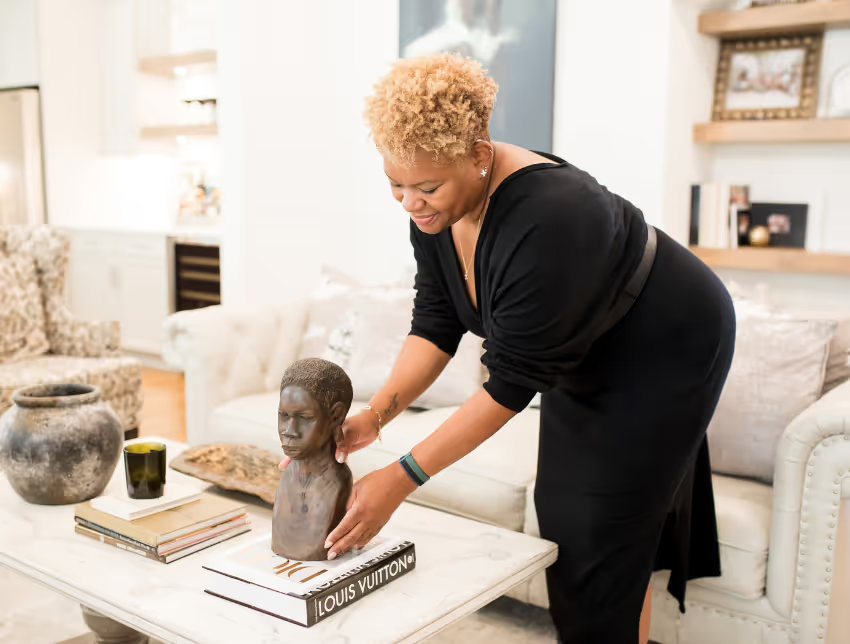
Brand photography by Stanley Desbas Photography. Thank you for helping tell the story behind Stacy Nicole Interiors.
Nicole S. Ingram, ASID Allied is the creative force behind Stacy Nicole Interiors and the author of TriniGal Chronicles. A designer, lifestyle curator, and beauty enthusiast, Nicole shares soulful inspiration through her signature blend of elevated interiors, personal style, and island-rooted charm.
Welcome to TriniGal Chronicles — where I serve up daily doses of interior design, lifestyle, and beauty to help you live a soulful, stylish life. Sprinkled in, you’ll find cocktail recipes, my favorite meals to cook, and maybe a design find or two. Stay a while, and don’t forget to say hello in the comments!
Meet Nicole